


How to get rid of gingivitis: remove the plaque and tartar that cause it. Brush twice a day, floss once a day, and have built-up tartar removed with a professional cleaning, because a toothbrush cannot remove it. Caught early, gingivitis can be reversed. At Oakville Dental in Oakville, your hygienist checks your gums at every visit.
Turning Gingivitis Around
- Gingivitis is reversible. It is the earliest stage of gum disease, and it can be turned around
- Plaque is the cause. Every step that removes plaque helps your gums heal
- Tartar needs a professional. Once plaque hardens, only a cleaning can remove it
- Home care keeps it away. Brushing twice and flossing once a day are your daily defence
- Do not ignore bleeding. If your gums keep bleeding after a few weeks of good care, book a check
Bleeding when you brush is easy to shrug off. Many patients in Oakville tell us they assumed they were "just brushing too hard." Often, it is gingivitis, and the good news is that it is the most treatable stage of gum disease.
This guide explains what gingivitis is, what causes it, what you can do at home, what a professional cleaning adds, and the signs that it may be moving beyond gingivitis.
What Is Gingivitis?
What is gingivitis? It is inflammation of the gums, and the earliest stage of gum disease. The Canadian Dental Association describes the warning signs as puffy gums, traces of blood on your toothbrush or a change in the colour of your gums, and notes that it is usually not painful.
Because it does not hurt, gingivitis is easy to miss. Your gums may look a little red and bleed when you brush, but you may not notice anything else. That is exactly why it matters: it is the stage where gum disease can still be reversed.
Gingivitis is the first of four stages. For the full picture, including how gum disease develops and how it is treated at each stage, read our guide on how to know if you have gum disease.
What Causes Gingivitis?
What causes gingivitis is plaque: a clear, sticky film that forms on your teeth every day and contains bacteria. When plaque sits along the gumline, those bacteria irritate the gums and cause inflammation.
If plaque is not removed, it hardens into tartar. Tartar can only be removed professionally, and it gives plaque even more places to collect.
Things that make gingivitis more likely include:
- Brushing less than twice a day or skipping flossing
- Smoking
- Eating a lot of sugar
- Long gaps between professional cleanings
- Areas that are hard to clean, such as crowded teeth
How to Get Rid of Gingivitis at Home
Home care is the foundation. These steps, recommended by the CDA, remove plaque before it can harden:
- Brush twice a day. Spend two minutes each time, angling the bristles toward the gumline, and brush your tongue too
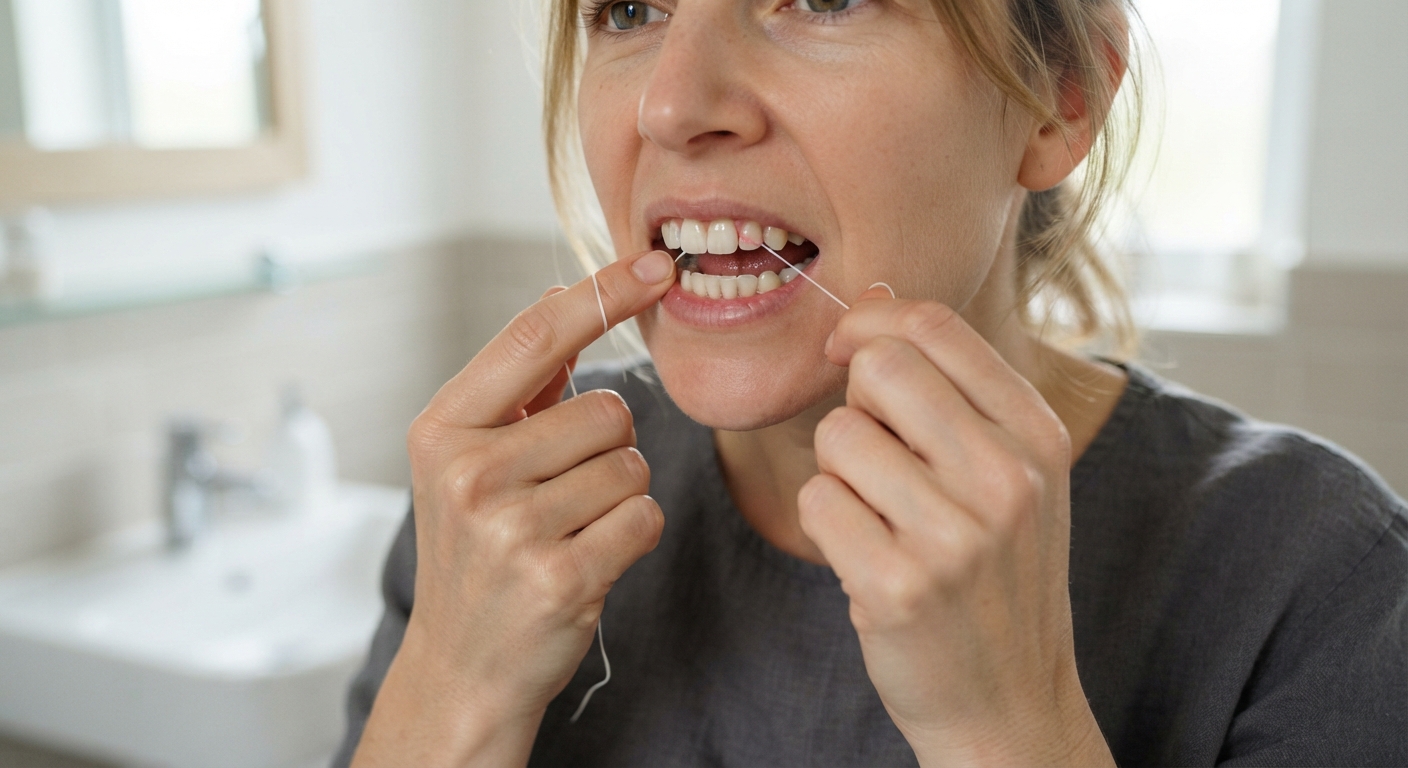
- Floss once a day. Floss reaches the plaque between teeth that a toothbrush misses. Curve it around each tooth and slide gently under the gumline
- Check your gums. Look for redness, puffiness or bleeding, and tell your dentist about them
- Eat well. Cut back on sugary foods and drinks, which feed plaque bacteria
- Do not smoke. Smoking is a major contributor to dental problems
A tip about bleeding: many people stop flossing when their gums bleed. Gentle, daily flossing usually helps the bleeding settle as the gums heal. If it does not improve after a couple of weeks, have it checked.
Brushing and Flossing Habits That Let Gingivitis Linger
Plenty of people brush every day and still have bleeding gums. Usually, a small habit is letting plaque stay behind. Watch for these:
- Brushing too fast. Thirty seconds misses the gumline. Aim for two full minutes
- Skipping the gumline. Plaque collects where the teeth meet the gums, so tilt the brush toward that edge
- Scrubbing hard. Pressing harder does not clean better and can irritate gums. Use a soft brush and gentle circles
- Flossing only when food is stuck. Plaque between teeth builds every day, so floss every day
- Missing the same spots. Back teeth and the inside surfaces are easy to skip. Ask your hygienist to show you where plaque is collecting
Fixing one or two of these is often enough to see a difference in how your gums look and feel.
Why Home Care Alone Is Not Always Enough
If you want gingivitis gone for good, the answer usually includes a professional cleaning. Once plaque has hardened into tartar, no amount of brushing will remove it, and the gums cannot fully heal while it stays there.
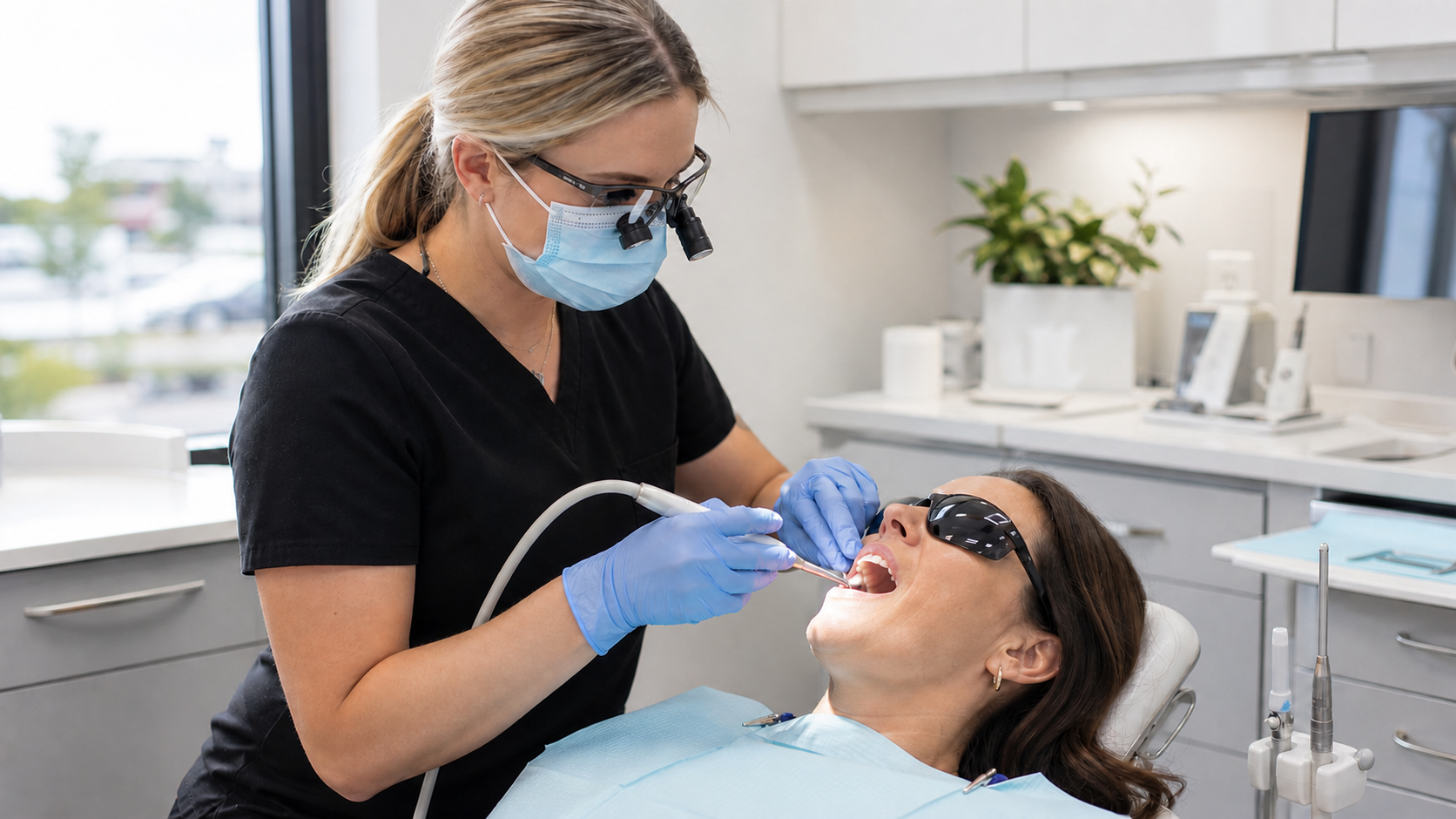
At a cleaning at Oakville Dental, a trained dental hygienist:
- Removes plaque and tartar with ultrasonic and manual scaling instruments
- Polishes the teeth to remove surface stains
- Checks your gum health and uses digital charting to monitor it over time
- Gives personalized home care guidance, beyond basic brushing and flossing
Most patients have cleanings every 3 to 6 months, and more frequent visits may be advised for gum concerns. Learn more about teeth cleaning in Oakville.
How Long Does It Take to Get Rid of Gingivitis?
It depends on how much tartar is present and how consistently plaque is removed afterwards. Many people notice less bleeding within a few weeks of a professional cleaning and good daily care, but everyone's gums respond differently.
What matters most is the direction: gums that bleed less and look less puffy over time are healing. Gums that keep bleeding, or get worse, need a closer look.
When Gingivitis Becomes Something More
If gingivitis is not treated, it can progress to periodontitis. Tiny pockets of infection form where the gums attach to the teeth, and over time the tissue and bone that hold the teeth can break down.
Book a check if you notice:
- Bleeding that continues despite good brushing and flossing
- Gums pulling away from your teeth
- Bad breath or a bad taste that keeps coming back
- Teeth that feel loose or a bite that feels different
- Tenderness, swelling or pus around a tooth
If gum disease has moved beyond gingivitis, a deep cleaning that removes buildup below the gumline may be recommended. See scaling and root planing in Oakville for how that works.
Can You Get Rid of Gingivitis Fast?
There is no overnight fix, and products that promise one should be treated with caution. The fastest reliable route is a professional cleaning to remove tartar, followed by daily brushing and flossing. Choosing oral care products with the CDA Seal of Recognition is one way to pick products reviewed for specific oral health benefits.
FAQs About Gingivitis
Ready to Get Your Gums Back to Healthy?
Still seeing pink in the sink after weeks of careful brushing? A cleaning and gum check gives you a clear starting point.
- Cleanings by trained dental hygienists, with ultrasonic and manual instruments
- Gum health charted digitally, so your progress is tracked from visit to visit
- Care that steps up when needed, from cleanings to deep cleaning and laser gum treatment
Call Oakville Dental or visit us at 300 North Service Rd W, Oakville, to book your cleaning. You can also read about dental hygiene in Oakville.
